|
Getting your Trinity Audio player ready...
|
London’s brickwork tells a story. Centuries of soot, pollution, weathering, and general city grime leave their mark on even the most beautiful buildings. It is no surprise that so many homeowners and property managers want their brickwork cleaned up and looking its best. But here is the hard truth — done wrong, brick cleaning can cause thousands of pounds worth of damage. And in London, it happens all the time.
Before you hire anyone or attempt anything yourself, read this first.
Why Brick Cleaning Goes Wrong
Brick looks tough. It has been standing for decades, sometimes centuries, so surely it can handle a good clean? Not always. Brick is actually a more delicate material than most people realise, and the wrong cleaning method can cause serious, lasting damage.
Here are the most common and costly mistakes made during brick cleaning in London.
Mistake 1 — Using High-Pressure Washing on the Wrong Brickwork
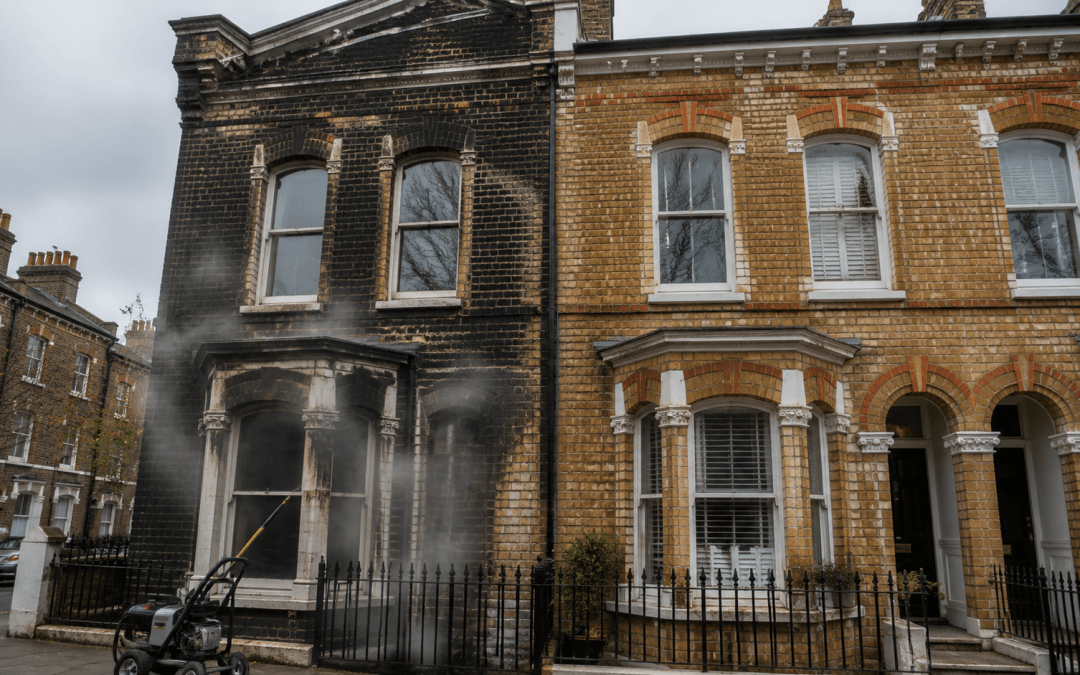
Pressure washing is fast, affordable, and satisfying to watch. It is also one of the most misused methods in the industry. On soft or older bricks — which are extremely common across London’s Victorian and Edwardian properties — high-pressure water blasts away the outer surface of the brick itself. Once that protective layer is gone, the brick becomes far more absorbent, leading to damp problems, frost damage, and accelerated deterioration.
Pressure washing has its place. But it must be matched carefully to the type of brick being cleaned. Getting this wrong is an expensive mistake that cannot be undone.
Also, read this blog: How do Weather and Pollution Affect Brick Mortar Over Time?
Mistake 2 — Using Harsh Chemicals Without Testing First
Chemical cleaning can be highly effective when done properly. But apply the wrong product to the wrong brick, and you can cause staining, streaking, mortar erosion, and even structural damage. Some acidic cleaners, for example, react badly with certain types of London stock brick, leaving permanent marks that are worse than the original dirt.
Any reputable specialist will always test a small, hidden area before treating an entire wall. If a contractor skips this step, that is a serious red flag.
Mistake 3 — Ignoring the Mortar
The joints between your bricks matter just as much as the bricks themselves. Aggressive cleaning methods can strip and weaken old mortar, opening up gaps that let in water. In London’s wet winters, this leads to damp penetration, efflorescence — the white salt deposits you sometimes see on brickwork — and in serious cases, structural problems.
A good brick cleaning job always considers the condition of the mortar. If the joints are already weak or crumbling, they should be addressed before any cleaning takes place.
Mistake 4 — Hiring Someone Without Specialist Experience
This is where most problems begin. Brick cleaning looks straightforward from the outside, but it requires real knowledge of materials, methods, and the specific challenges that come with London’s varied and often historic building stock.
Gladstone Tuck Pointing & Restoration Ltd work with London properties every day. Their team understands the difference between a hard engineering brick and a soft London stock, and they know exactly which cleaning method suits each one. From gentle chemical treatments to low-pressure steam cleaning, they choose the right approach for the job — not just the quickest or cheapest one.
The Right Way to Clean London Brickwork
Good brick cleaning in London starts with a proper assessment. What type of brick is it? How old is the building? What is the source of the staining? What condition is the mortar in?
Answer those questions first, and you are already ahead of most people who get this wrong.
Contact Gladstone Tuck Pointing & Restoration Ltd for an honest assessment of your brickwork. Protect your property — and avoid the costly mistakes that so many others have made before you.